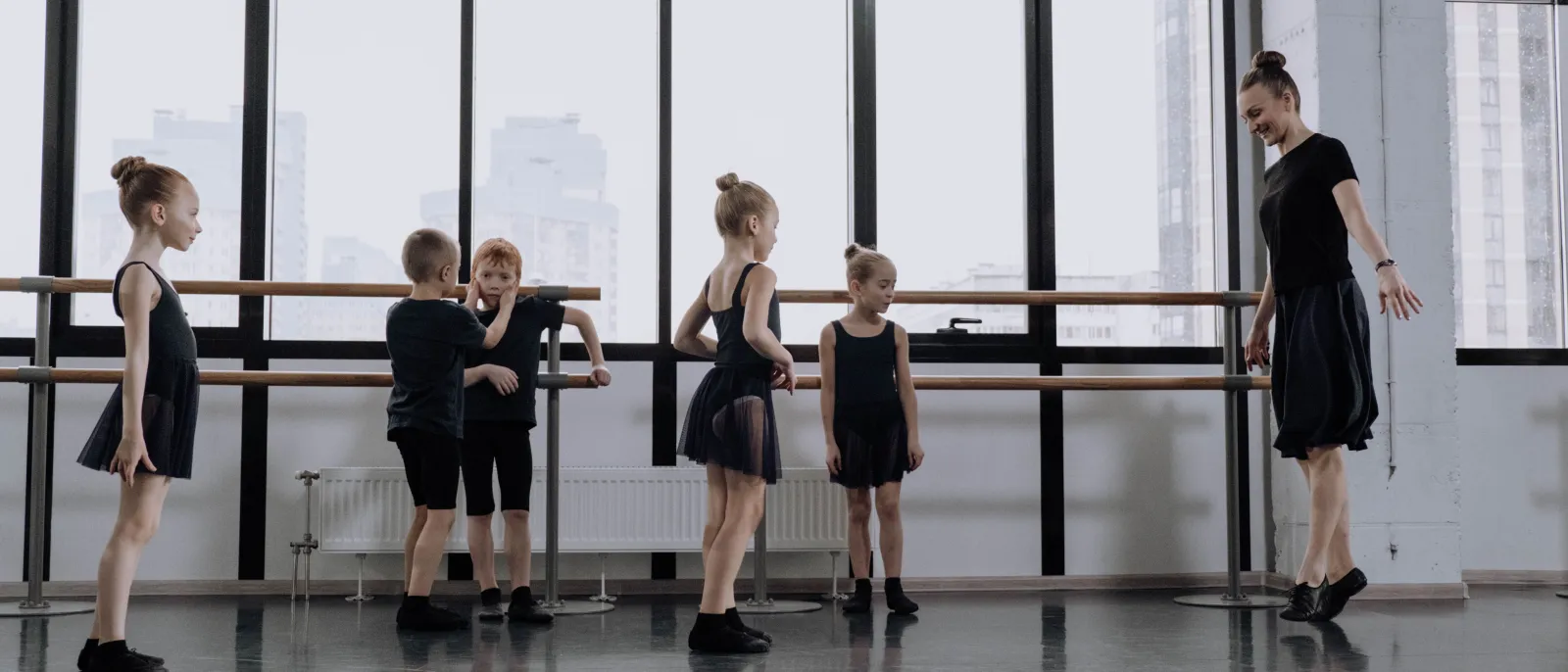
Short answer: yes, and for more reasons than most people expect. Ballet builds balance, coordination and real physical strength, and it does something for confidence and self-control that is harder to measure but that parents notice.
Here is what a class actually looks like, what it does for a child, and the two things worth keeping an eye on.
What happens in a class
Classes change a lot with age, and knowing the shape helps you judge whether one is any good.
Three to five. Thirty to forty-five minutes of stories, music and imagination. Be a cat. Melt like ice. Tiptoe past the sleeping giant. Underneath the play they are learning to listen, take turns, follow an instruction and move in time. Nobody should be correcting a four year old's turnout. Progress at this age means joining in.
Five to seven. Real ballet starts to appear. Positions of the feet, a little work at the barre. Many schools begin a graded syllabus here, which is when exams enter the picture.
Eight to eleven. Children can hold a position, remember a sequence and act on a correction. Technique becomes the point. Most add a second class around now.
Twelve and up. Boys move towards jumps and strength. Pointe becomes possible for girls, but not automatically at twelve. A teacher should be looking at ankle strength, core control and how far through growth she is. A school that puts a whole year group on pointe on a date is one to ask questions of.
Starting late is not a problem. A nine year old learns the same things a five year old learns, usually faster, because they understand the instructions.
What it does for them
Balance and coordination. This is the best evidenced benefit. Seven year olds who did ballet twice a week for three months came out measurably better at balance, at sensing where their limbs are without looking, and at keeping time, compared with children doing ordinary school PE.
Strength and bone. Ballet is weight-bearing and full of small jumps, which is exactly the kind of loading that builds bone during the years the skeleton is being laid down.
Attention. Remember a sequence, wait for a count, stop precisely, now do the other side. Studies with six and seven year olds have found gains in the ability to concentrate and hold instructions in mind. Worth knowing that this comes from taught, structured classes. A trial that gave children ten minutes of copy-along dance videos found no effect at all.
Mood. A review of seventeen studies of children and teenagers found dance improved fitness and motor development and reduced low mood and distress. The evidence is encouraging rather than conclusive, and most of it studies dance in general rather than ballet specifically.
The social part, which no study captures well. A ballet class is a group doing the same thing at the same time. There is no bench in ballet and nobody sits out. For a child who is not drawn to competitive team sport, that can be the difference between doing an activity and doing nothing.
Being corrected. A teacher will correct your child out loud, in front of other people, about something they were trying hard at, and the expectation is that they adjust and go again. That is a genuinely useful thing to learn. So is the pace: a grade takes a year, and nothing about ballet rewards wanting it immediately.
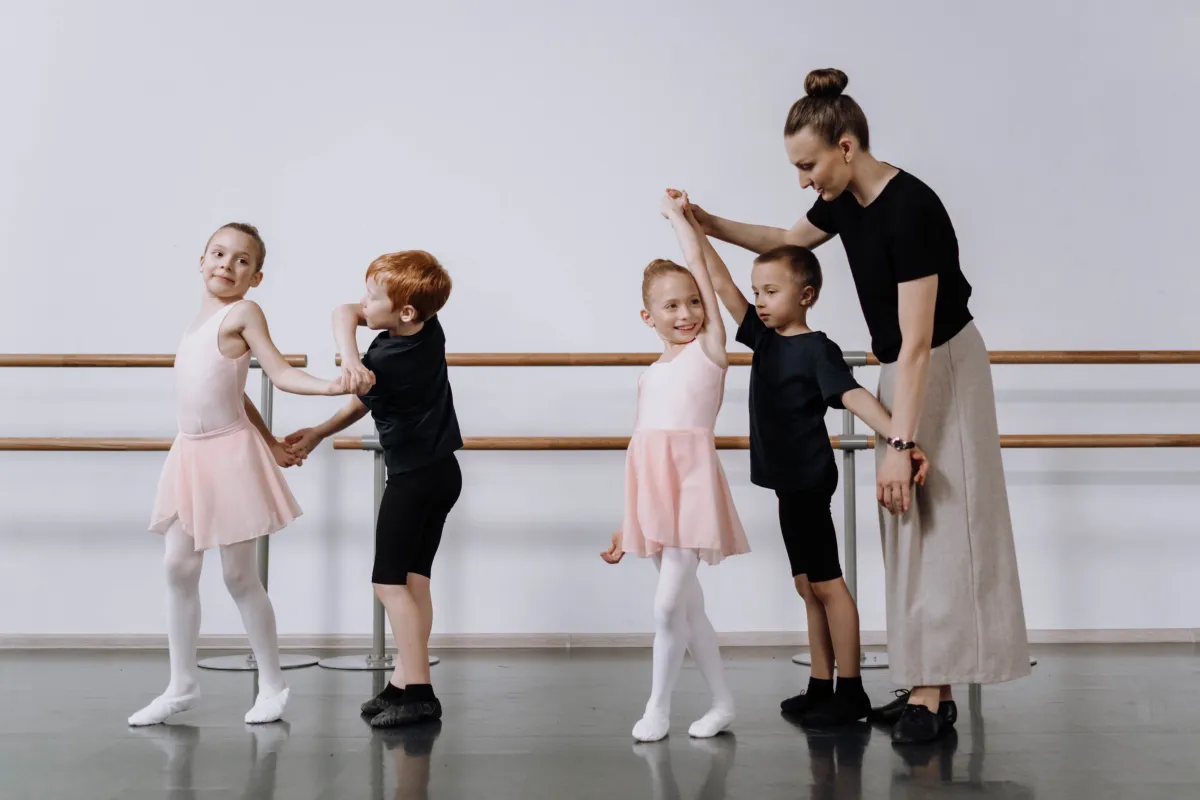
The year they seem to get worse
This is the thing nobody tells parents, and it makes more children quit than anything else.
Somewhere between eleven and fourteen, dancers get temporarily worse. Bones grow faster than muscles, so strength and flexibility drop. Legs get longer before the body catches up, so alignment goes. Balance wobbles and pirouettes stop working. It can last eighteen months to two years.
The hard part is not physical. A child who could do something last term and cannot do it now, while their friends look like they are improving, will quietly decide they have lost their talent. They have not. Published guidance for dance teachers is explicit that it is temporary and the ability comes back.
A good teacher handles this by easing off jumps and knee-loading work for a while and spending the time on control and alignment instead. They may suggest skipping an exam that year.
If your child hits thirteen and suddenly hates the class they used to love, ask about this first.
Two things to keep an eye on
Injuries are mostly overuse, and they track hours. Ballet injuries are rarely dramatic. They build up slowly in feet, ankles and knees. The rate for amateur dancers works out at roughly one injury per thousand hours of dancing, and a child doing one class a week dances thirty to forty hours a year. Risk climbs with hours, so a recreational dancer and a child training most days are in completely different situations.
How a school talks about bodies. Ballet has a real problem with eating disorders at the serious end. Rates among ballet dancers run around three times those in comparable groups. Those figures come from vocational and professional dancers, not from children in a weekly class, so they do not describe your six year old. They do describe where the path leads, which is why it is worth noticing the language early.
A good school talks about what bodies can do, not what they look like. If you ever hear weight discussed with a child, act on it.
One more thing on touch, since it surprises people. Ballet teachers correct with their hands, adjusting a shoulder or a hip, because it is faster than describing it. Irish guidance treats this as normal practice and says teachers should ask first, explain why, and keep it brief. It also says parents and children can opt out if they would rather. Teachers working with children should be Garda vetted, and you are entitled to ask.
Children with additional needs
Ballet adapts better than its reputation suggests. A number of schools run classes specifically for dancers with additional needs, and they are better spread around the country than most things in ballet: Chester School Of Dance and Dublin City Ballet School in Dublin, Ciara Beech Dance Academy, Galway Dance Centre and Na hEalai Damhsa in Galway, Lucy French School Of Dance in Cork, The Academy of Dance in Kerry, AOK-DANCE and DAPA in Tipperary, EmBrace Dance Academy in Meath, and Victoria Walker Dance School in Leitrim.
Schools come and go from that list, so the current one is always on the schools directory, under the "Adaptive / additional needs" filter.
Plenty of other schools will happily take a child with additional needs in an ordinary class if you talk to them first. Ask how they have adapted for other children rather than whether they can. The good ones will have an answer ready.
If they are never going to be a dancer
Most children who do ballet will not become dancers, and that was never the point.
What travels is balance, single-leg strength, knowing how to land, spatial awareness, timing, and the habit of being corrected and trying again. Those turn up in other sports and in every other kind of dance.
It is also the base grammar for the rest of dance, which is why musical theatre and commercial training assume some of it, and why competitive Irish dancers use it for foot articulation and posture. We cover that in ballet for Irish dancers.
Lindsay Ashe-Browne, Artistic Director of Irish National Youth Ballet, says of dancers who move on to other styles that they "have all said having that ballet background has made them stronger and confident in general dance language".
If your child wants to do something else, ballet is often the thing that makes the something else easier. That is a perfectly good reason to send them.
Finding a class
Browse ballet schools across Ireland, or read choosing a ballet school for what to ask on a first phone call. What to wear to ballet covers kit for a first lesson.
If you are reading this about a son, we have a separate guide to ballet for boys in Ireland. Adults have their own way in through Silver Swans and ballet for over 55s.
Sources. Balance and coordination: Chatzopoulos et al. 2019. Dance video breaks and attention: van den Berg et al. 2019. Wider benefits: Tao et al. 2022, a review of seventeen studies. Growth spurts: The Challenge of the Adolescent Dancer, IADMS. Injury rates: Smith et al. 2015. Eating disorders among dancers: Arcelus et al. 2014. Guidance on physical correction and vetting: Youth Dance: Towards Best Practice, Dance Ireland.
Frequently asked questions
Is ballet good for children?
The research points that way. A 2022 systematic review of 17 studies found dance improved children's motor development, cardiovascular fitness and bone mineral density, and reduced depressive symptoms. The evidence is encouraging and consistent rather than conclusive, and most of it studies dance in general rather than ballet specifically.
What age should a child start ballet?
Most Irish schools take children from around three, usually in a short pre-school class built around play rather than technique. Formal training typically starts around six or seven. There is no advantage to starting earlier than a child is ready for.
What happens in a ballet class for a three or four year old?
Very little formal technique. Pre-school classes run 30 to 45 minutes on stories, music and imagery, and the real content is listening, taking turns, following instructions, moving in time and being comfortable without a parent in the room. Nobody should be correcting a four year old's turnout.
Is it too late for my child to start ballet?
No. A nine year old starting from scratch learns the same material a five year old learns, usually faster, because they understand the instructions. Starting later closes off a professional path, but that was never the point for the vast majority of children.
Does ballet help with coordination and balance?
Yes, and this is the best-evidenced benefit. In one controlled study, seven year olds who did ballet twice a week for three months performed significantly better on proprioception, postural sway and keeping time than a control group doing ordinary school PE.
Does ballet make children better at concentrating?
Dance interventions with six and seven year olds have improved inhibitory control and working memory, but the evidence is not uniform. A trial of 512 children given daily ten-minute Just Dance video breaks for nine weeks found no effect on inhibition at all. That tested an exercise break rather than a taught class, so it says little about a weekly ballet lesson either way.
Why does my child seem to be getting worse at ballet?
Almost certainly the adolescent growth spurt, which usually falls between 11 and 14 and lasts 18 to 24 months. Bones grow faster than muscles, so strength, flexibility, balance and coordination all drop temporarily and injury risk rises. Published dance-medicine guidance is clear that it is temporary and the ability returns. It is the single most common reason children quit, and it is worth talking to the teacher rather than the child concluding they have lost their talent.
Can a child with additional needs do ballet?
Often yes. Some Irish schools run adaptive or inclusive classes, and many will accommodate a child in an ordinary class if you speak to them first. A pilot study of therapeutic ballet with children with cerebral palsy found improvements in gait and inhibitory control, though it was a small study with no control group. Ask a school how they have adapted for other children rather than whether they can.
Is ballet safe for children?
Broadly, at recreational levels. A systematic review found 0.97 injuries per 1000 dance hours among amateur dancers, mostly overuse in the foot, ankle, knee and hip. Risk rises with hours danced, so a child in one weekly class is in a very different position from a vocational student training daily.
Should I worry about body image and ballet?
It is the risk worth knowing about. A meta-analysis of 33 studies found eating disorders in 16.4% of ballet dancers, around three times the rate in comparison groups. Those figures come mainly from vocational and professional dancers rather than children in recreational classes, but they are a reason to notice how a school talks about bodies. A good school talks about what bodies can do, not what they look like.
Is ballet worth it if my child will never be a dancer?
Most children who do ballet do not become professional dancers. The transferable parts are balance, single-leg strength, landing mechanics, spatial awareness and timing, all of which carry into other sports and other dance styles.
Last checked: 21 August 2026