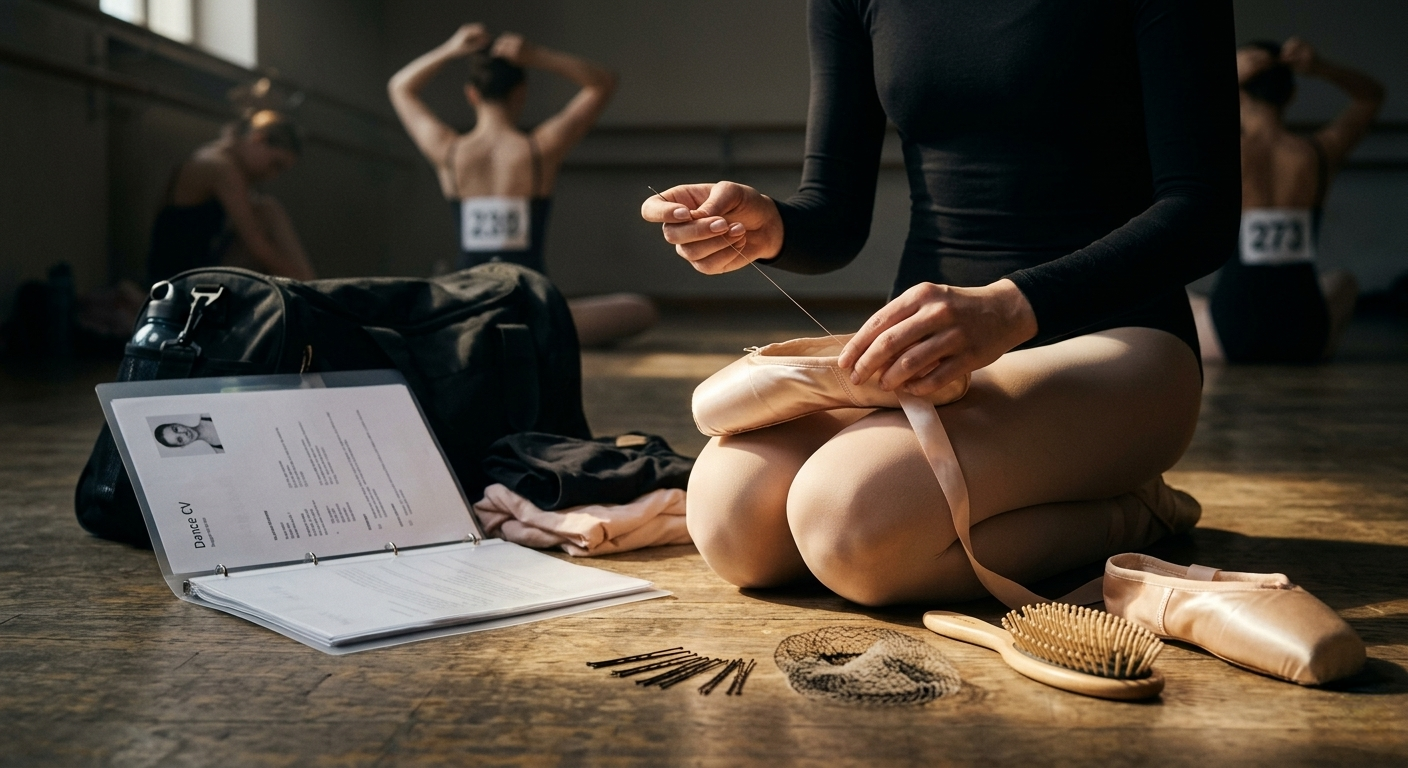
Auditioning for a vocational school or summer intensive is a major milestone. To help you stay focused on your technique, we’ve put together this essential checklist to ensure your preparation is as polished as your performance.
1. The Night Before: Preparation is Peace
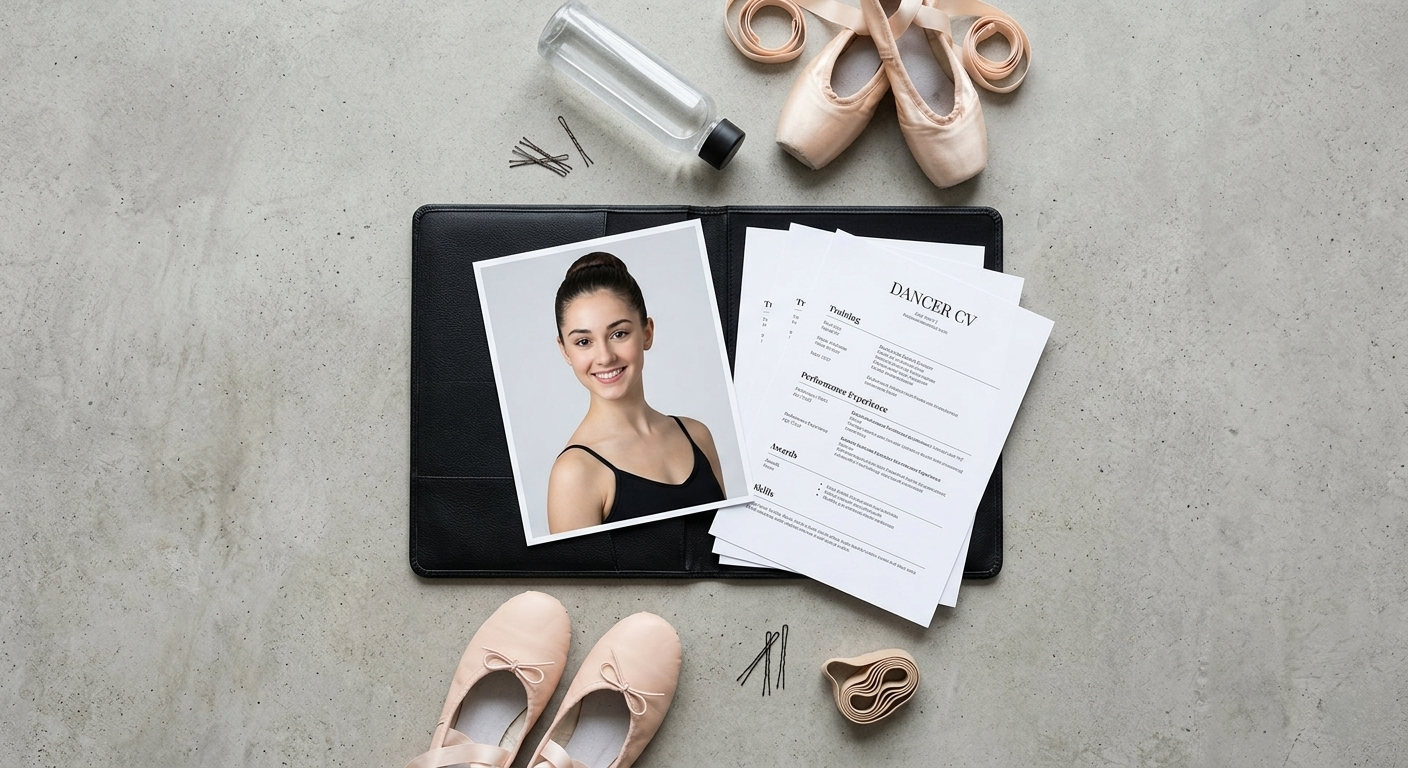
The "Double Check" Bag: Pack two of everything. Two pairs of tights (to avoid ladder emergencies!), two leotards, and all necessary shoes (flats and pointe shoes).
Documentation: If the school requires a Dance CV or a Headshot, store them in a stiff folder so they stay pristine and professional.
Rest & Fuel: Eat a balanced, energy-rich meal and aim for a full night's sleep. Your brain needs as much energy as your muscles to remember new combinations.
2. The "Audition-Ready" Hair & Grooming
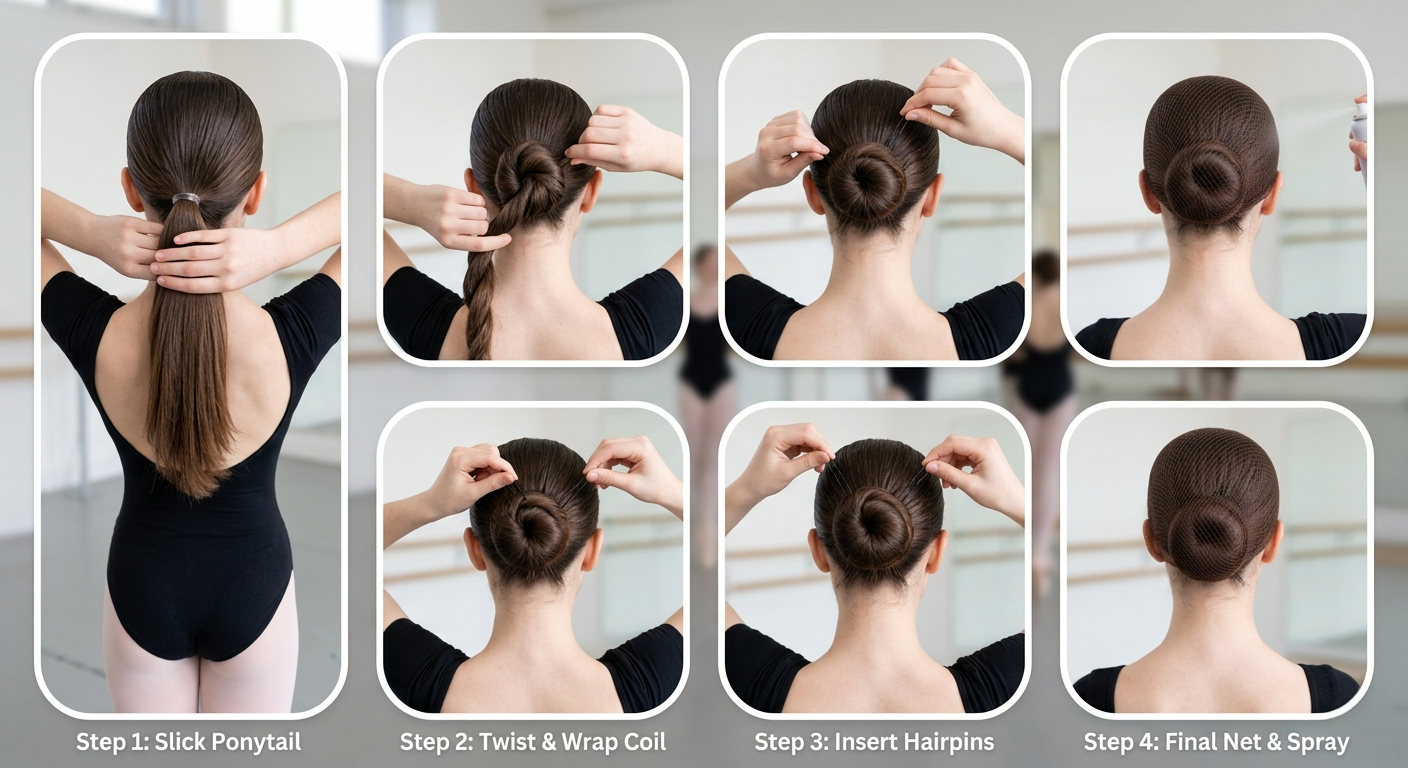
In a ballet audition, your hair is a functional part of your technique. A loose bun can distract you during turns, and "wispy" hair can obscure your neckline from the judges.
The Classical Bun: Aim for a "mid-height" bun, centred between the top of your head and the nape of your neck. This ensures it doesn't interfere with your head alignment or "spotting" during turns.
The Tools: Use a hairnet that matches your hair colour exactly. This keeps the bun flat and secure rather than bulky.
The Finish: Use a strong-hold gel or spray to smooth down any "flyaways." The goal is a clean silhouette that shows off the line of your neck and shoulders.
Short Hair/Boys: Ensure hair is styled away from the face. Use a small amount of product to keep it tidy. If hair is too short for a bun but long enough to move, use a thin, discreet headband that matches your hair colour.
Jewellery: Remove all jewellery before entering the studio. Small, discreet stud earrings are usually the only exception.
3. On the Day: Arrival & Etiquette
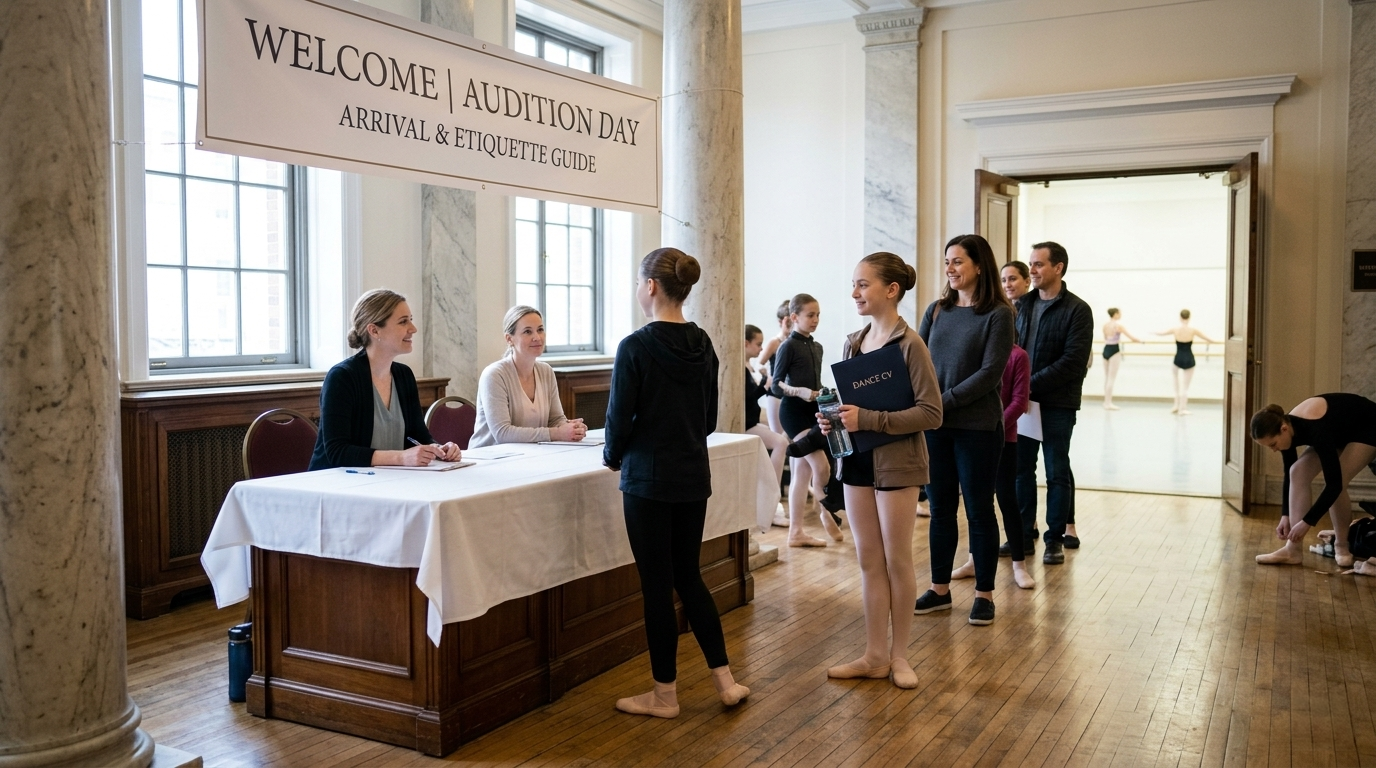
The 60-Minute Rule: Aim to arrive at the venue at least one hour before the start time. This gives you time to register, find the dressing rooms, and conduct a thorough warm-up.
Professionalism: The audition starts the moment you walk through the door. Be polite to the staff, the accompanist, and your fellow dancers.
Dress Code: Stick strictly to the school's requirements. If none are specified, a plain black leotard and pink/flesh-toned tights are the safest, most professional choice for classical auditions.
4. In the Studio: What the Panel is Looking For
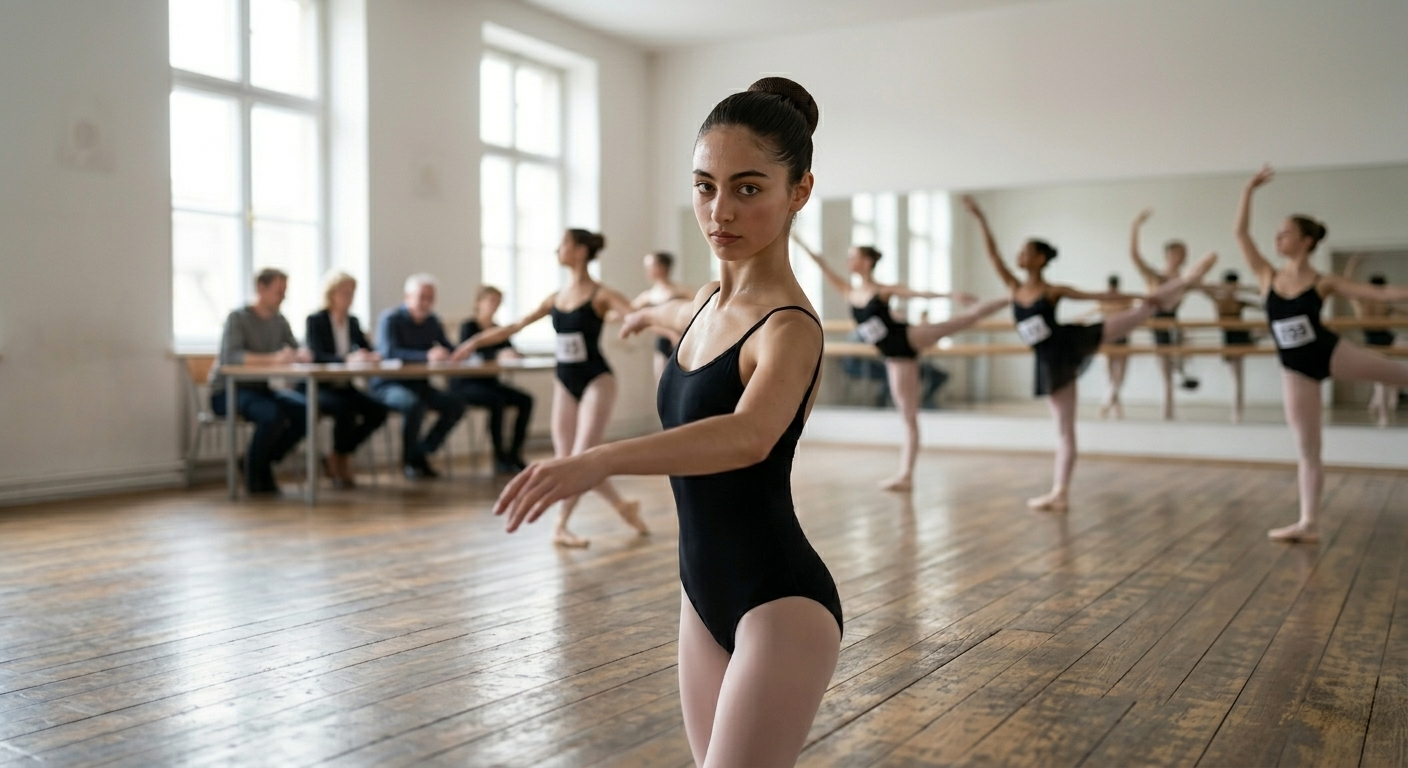
The judges aren't just looking for "perfection"; they are looking for potential and trainability.
Musicality: Show that you are listening to the phrasing. Sharpness where it's needed, and softness where the music allows.
Application of Corrections: If a teacher gives the group a correction, show that you’ve applied it immediately. This is one of the most important traits faculty look for.
Resilience: If you lose your balance or miss a step, don’t let it show on your face. Smile, keep your eye line up, and jump back in. Directors want dancers who can handle pressure with grace.
5. For the Parents: Supporting the Process
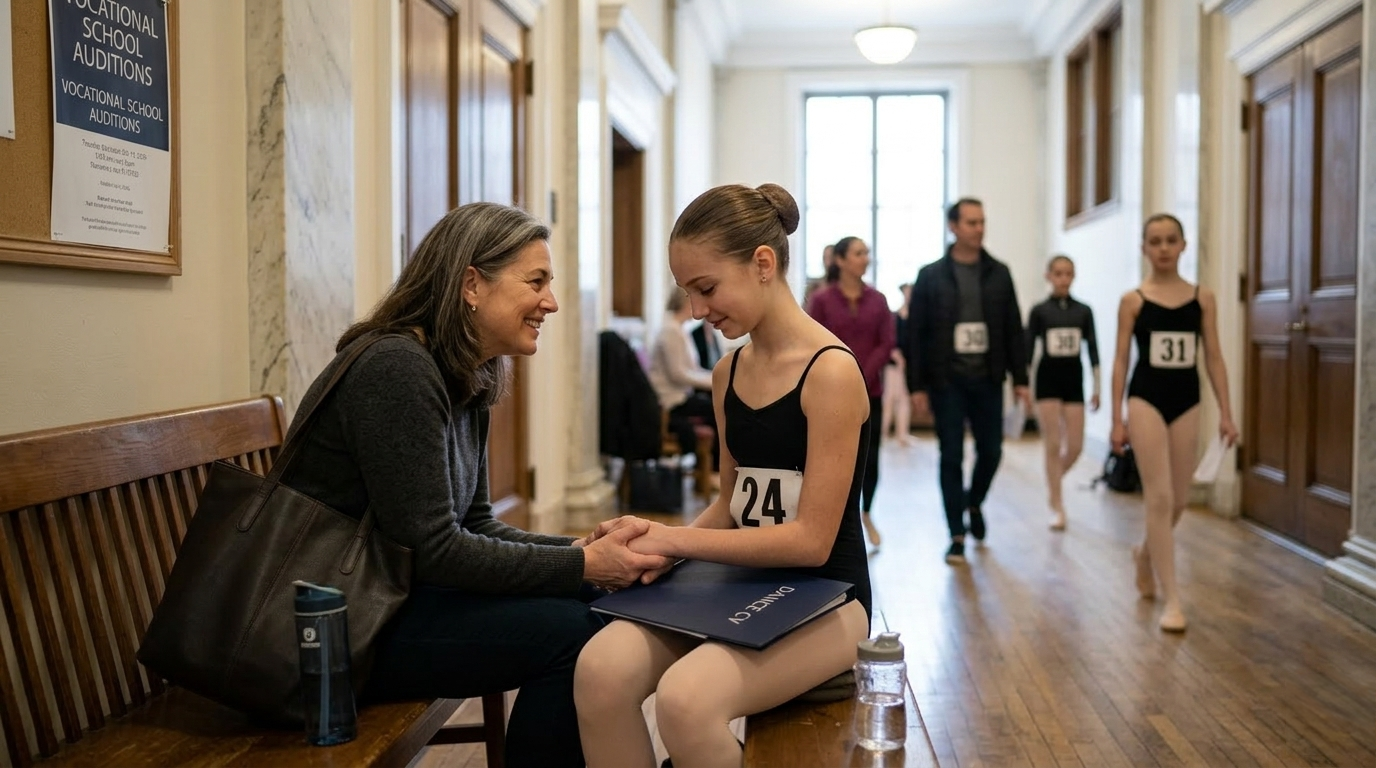
The "Post-Audition" Space: Dancers are often physically and emotionally exhausted. Give them some quiet time before asking for a "debrief."
Focus on the Effort: Celebrate the courage it took to audition rather than the potential result.
Ready to put these tips into practice? View our Latest Auditions & Opportunities page to find your next casting call.