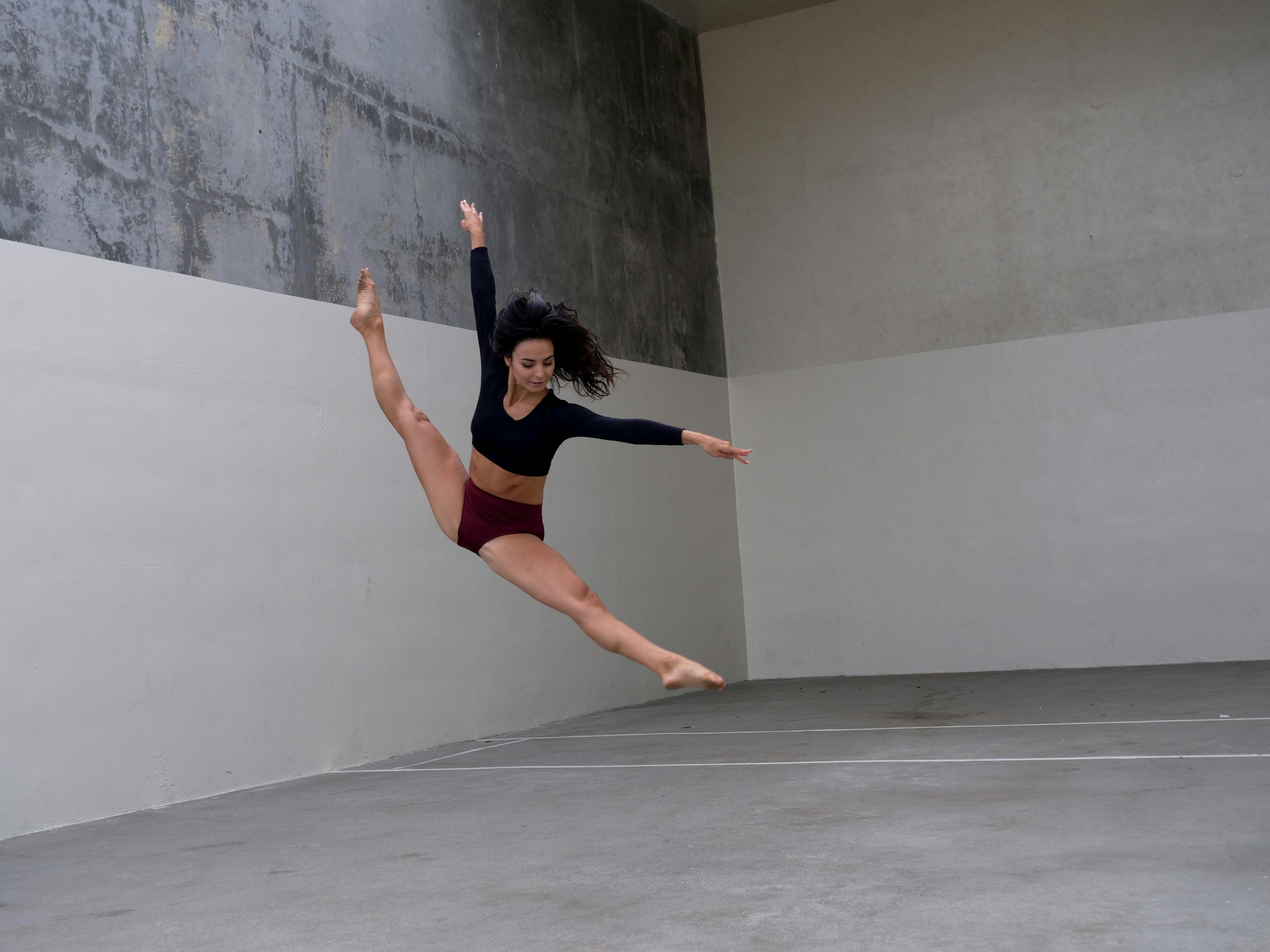
Cartwheels across the kitchen. Handstands against the couch. If that sounds like your house, you're probably weighing up gymnastics against acro dance. Both teach real acrobatic skills, and they suit different children.
What is acro dance?
Acro dance, often just called acro, mixes dance (usually jazz, lyrical or contemporary) with acrobatic skills such as walkovers, aerials and handsprings. The tricks are built into choreographed routines and performed on stage. Students learn new skills on mats with a teacher spotting them, then move off the mats as their strength and technique build.
How acro compares with gymnastics
Gymnastics trains acrobatic skills as a sport in their own right. It uses apparatus: beam, bars, vault and floor, plus trampoline in some clubs. Floor routines take place on a 12 m square competition floor with give built in, which helps gymnasts get height for tumbling.
Both go well beyond cartwheels. Acro students work up to aerials and front and back handsprings, the same kind of skills gymnasts learn. In acro, every trick has to flow out of the choreography and back into it.
How they're judged
Competitive gymnastics is scored to a code of points, with marks for how hard the skills are and how well they're done. Plenty of gymnasts never compete. Gymnastics Ireland runs recreational programmes such as GymSTART for children who want to learn without competing.
Acro is judged as dance, at dance competitions and festivals. Judges look at musicality and smooth transitions as well as the tricks.
Why acro often comes with a dance class
Acro relies on the control, alignment and core strength that dance builds, and every routine is set to music. That's why many dance schools recommend a ballet or jazz class alongside acro, and some insist on it. Ask the school before you enrol; our guide to choosing a dance school covers what else to check.
Is acro dance safe?
Like any activity with tumbling and backbends, acro carries risk. The knees, ankles, wrists and lower back take the most strain. There's very little research on acro dance itself. In related acrobatic sports, injuries are more common from age 13, and in children who train eight or more hours a week at age 11 (Purnell 2013). In gymnasts, backbend training within reason doesn't appear to be an unusual risk to the spine (Sands et al. 2016).
A safe acro class has:
a teacher trained in an acro syllabus, such as Acrobatic Arts
skills taught in order, each one building on the last
mats and a spotter for anything new
small groups
Which suits your child?
Gymnastics, if they want to tumble, try the beam and bars, and enjoy working towards new skills and scores.
Acro dance, if they love music and performing and want their tricks to be part of a dance.
Frequently asked questions
Is acro dance the same as acrobatic gymnastics?
No. Acrobatic gymnastics, often called acro gymnastics, is a gymnastics discipline in which pairs and groups perform lifts, balances and tumbling. Acro dance is a dance style taught in dance schools.
Can a gymnast switch to acro dance?
Yes, and plenty do. Gymnasts usually arrive with the strength and the skills. They'll need dance classes to connect their tricks with the choreography.
Do acro dancers compete?
Yes. Many dance schools have acro competition teams that perform at dance competitions and festivals.
Last checked: 21 October 2026